LMS
LMS
Last updated on 19th May 2026| 13154

- The Impact of AI On IT Careers
- The Shift from Coding to System Design
- AI Augmenting Software Development
- The Rise of AI Operations and MLOps
- Demand for AI Security Specialists
- Transformation in Data and Analytics Roles
- The Growing Need for Soft Skills
- Continuous Learning as a Job Requirement
- Conclusion
The Impact of AI On IT Careers
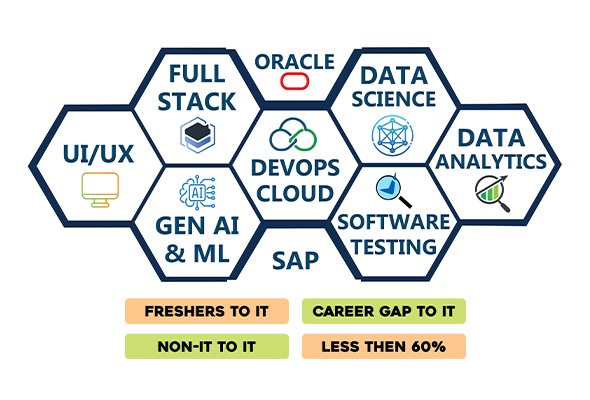
The technology industry is currently going through a massive shift that is making a lot of software professionals nervous about their long-term AI On IT Careers job security. Artificial intelligence is no longer just a buzzword used in research papers it is now actively writing code, debugging software, and managing complex server infrastructure. This rapid evolution has sparked a very real fear that Artificial Intelligence Training will eventually replace entry-level developers and IT support staff. However, looking closely at how enterprises are actually adopting these tools reveals a completely different picture. AI is not destroying IT careers it is fundamentally changing what it means to be a technology professional. The days of spending eight hours a day writing basic, repetitive code are coming to an end. Instead, IT workers are being forced to evolve from pure task-executors into strategic problem-solvers. Understanding this transition is critical for anyone looking to survive and thrive in the next decade of tech. Those who refuse to adapt their skill sets will undoubtedly struggle, while those who embrace AI On IT Careers as a collaborative tool will find themselves in higher demand than ever before. Staying proactive with AI adoption ensures stronger career growth, and focusing on strategic problem-solving builds credibility. Over time, this mastery positions you as a fresher who can thrive in the AI-driven IT ecosystem.
The Shift from Coding to System Design
The most immediate impact AI is having on the industry is the devaluation of raw coding skills. For years, the ability to memorize syntax and write hundreds of lines of boilerplate code was the primary barrier to entry for software engineering jobs. AI tools like GitHub Copilot and ChatGPT can now generate this basic code in seconds. This does not mean software engineers are no longer needed. It means the job description is shifting upstream. Companies no longer pay top salaries for someone who can just write a function. They pay for someone who can look at a messy business problem, design a scalable system architecture to solve it, and then use Artificial Intelligence Training to rapidly prototype that solution. Freshers entering the industry must focus less on memorizing programming language syntax and more on understanding software design patterns, cloud infrastructure, and system integration. If your only skill is writing basic loops and conditional statements, your job is absolutely at risk. If your skill is designing how different AI models and databases talk to each other, you are entering a golden age of tech employment. Staying consistent with system design practice ensures stronger preparation, and focusing on architecture builds credibility. Over time, this mastery transforms you from a fresher into a professional who can confidently lead AI-driven projects.
Ready to Get Certified in Artificial Intelligence ? Explore the Program Now Artificial Intelligence Online Training Offered By ACTE Right Now!
AI Augmenting Software Development
- Speeding Up the Development Cycle: AI tools are drastically reducing the time it takes to bring a product to market. Developers can use AI to generate initial code drafts, write unit tests, and document the codebase automatically, allowing teams to focus on complex business logic.
- Automated Debugging and Refactoring: Instead of spending hours hunting down a missing semicolon or a memory leak, developers can now feed their error logs into AI assistants it helps you Step-by-Step Guide to Becoming an AI Engineer. The AI instantly highlights the buggy code and suggests optimized fixes, making software much more stable.
- Shifting the Developer Focus: Because AI handles the tedious parts of coding, developers are freed up to focus on user experience, performance optimization, and security. The job becomes less about typing and more about thinking critically about the product.
- Lowering the Barrier to Entry: Paradoxically, AI is making it easier for non-traditional tech workers to build software. A product manager with no coding background can now use AI to build functional prototypes, blurring the lines between technical and non-technical roles.
- The Need for Code Review Skills: AI can write bad code just as fast as it writes good code. Developers now need the critical thinking skills to review AI-generated code for security vulnerabilities, inefficiencies, and alignment with company standards before it ever reaches production.
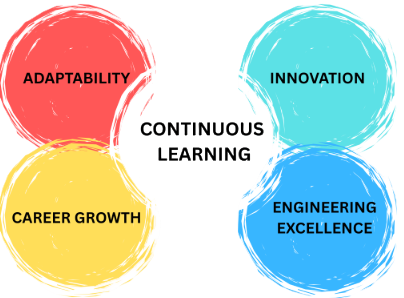
- The Pace of Technological Change: AI tools are updating on a weekly basis. A framework you learn today might be completely obsolete in six months. The idea of learning a skill in college and using it for a decade is fundamentally dead in the IT industry.
- Dedicating Time for Upskilling: IT professionals must now treat continuous learning as a core part of their job description. This means dedicating hours every single week to reading documentation, testing new AI tools, and taking online courses.
- Unlearning Old Habits: Sometimes upskilling means actively unlearning the traditional ways of doing things. Developers who stubbornly refuse to use Artificial Intelligence Training and copilots because they prefer to type everything manually will simply be outpaced by those who embrace the new tools.
- Earning Micro-Credentials: Instead of pursuing four-year degrees, tech workers are increasingly relying on short, focused certification programs. Earning cloud AI badges or specialized MLOps certificates is a faster way to prove you are keeping up with the market.
- Building a Public Learning Portfolio: Showing employers that you are actively learning is crucial. Maintaining a blog, posting AI project experiments on GitHub, or sharing insights on LinkedIn proves that you are adaptable and committed to growing with the industry.

Develop Your Skills with Artificial Intelligence Training
Weekday / Weekend BatchesSee Batch DetailsThe Rise of AI Operations and MLOps
As companies rush to integrate artificial intelligence into their own products, a completely new IT discipline has exploded in demand. Machine Learning Operations, or MLOps, is the practice of deploying, monitoring, and maintaining AI models in a live production environment. Building an AI model in a lab is easy keeping it accurate and fast when thousands of users are querying it is incredibly difficult. This has created a massive boom in specialized IT jobs. MLOps engineers build the pipelines that feed fresh data to AI models so they do not become outdated. then Exploring Career Paths in Artificial Intelligence for Freshers, They monitor the infrastructure to ensure the models do not crash during peak traffic. For freshers, learning MLOps tools like MLflow, Kubeflow, and cloud AI services is a brilliant career move.
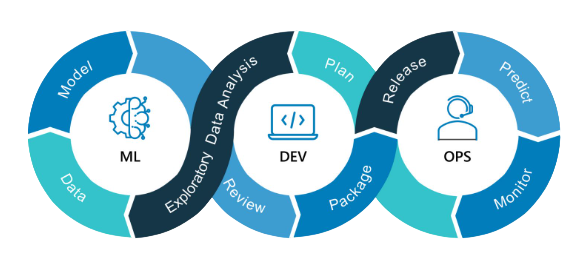
Traditional IT operations are becoming automated, but the operations required to keep AI systems running smoothly are heavily understaffed. This niche offers incredible job security and some of the highest salaries in the current tech market. Staying consistent with MLOps practice ensures stronger preparation, and focusing on deployment builds credibility. Over time, this mastery positions you as a fresher who can confidently manage enterprise AI systems.,/p>
To ExploreArtificial Intelligence in Depth, Check Out Our Comprehensive Artificial Intelligence Online Training To Gain Insights From Our Experts!
Demand for AI Security Specialists
With every new technology comes a massive wave of security vulnerabilities, and artificial intelligence is no exception. AI systems introduce completely new attack vectors that traditional cybersecurity professionals do not understand. Hackers are now using techniques like data poisoning to secretly corrupt AI training data, or prompt injection to trick chatbots into bypassing security filters. Furthermore, companies are panicking about their employees feeding sensitive corporate data into public AI models like ChatGPT, leading to massive data leaks. This has created an urgent, desperate demand for AI security specialists. These professionals are tasked with building secure AI frameworks, encrypting training data, and creating internal company policies for safe AI usage. If you have an interest in cybersecurity, pivoting toward AI security is the fastest way to guarantee long-term career growth thats Why AI Is a Promising Career Option for IT Freshers. You will no longer just be protecting servers and passwords you will be protecting the intellectual core of the company’s automated decision-making engine. Staying proactive with AI security ensures stronger opportunities, and focusing on safe frameworks builds credibility. Over time, this mastery transforms you into a professional who can confidently safeguard enterprise AI systems.
Looking to Master Machine Learning? Discover the Artificial Intelligence Expert Masters Program Training Course Available at ACTE Now!
Transformation in Data and Analytics Roles
Data analysts and data engineers are experiencing a massive shift in their daily responsibilities due to generative AI. Previously, an analyst might spend days writing complex SQL queries and building static dashboards to answer a single business question. Now, a business user can simply type a question in plain English to an AI tool and get an instant chart. This does not mean data teams are being fired. Instead, their role is elevating from report-builders to data governors and Emerging AI Trends in the IT Industry . AI can easily generate a chart, but it requires a human to ensure the data feeding that AI is accurate, clean, and free of bias. Data engineers are now spending less time building basic pipelines and more time building the complex data architectures that power these AI assistants. The future belongs to data professionals who understand data governance, data quality management, and how to securely integrate large language models with internal company databases. The skill set has shifted from pulling data to managing the infrastructure that interprets it. Staying consistent with governance practice ensures stronger preparation, and focusing on data quality builds credibility. Over time, this mastery positions you as a fresher who can confidently manage enterprise data ecosystems.
The Growing Need for Soft Skills
As AI takes over the hard technical tasks like writing code and querying databases, the premium on human soft skills is skyrocketing. An AI cannot sit in a meeting with a confused client and figure out what they actually want. An AI cannot negotiate project deadlines with a difficult stakeholder or mentor a junior team member through a tough project. Communication, empathy, problem-solving, and business acumen are becoming the most valuable assets a technology professional can possess. In the past, a brilliant programmer who couldn’t communicate could still survive by hiding in a corner and writing code. That luxury is gone. Companies are now looking for technologists who can act as translators between the business side and the AI tools now see How India Become a Technology Superpower. You need to be able to explain complex technical limitations to a non-technical CEO in a way that makes sense. Developing these interpersonal skills is no longer optional it is the primary way you will differentiate yourself from a highly capable AI assistant. Staying proactive with communication ensures stronger career growth, and focusing on empathy builds credibility. Over time, this mastery positions you as a fresher who can thrive in AI-driven enterprises.
Preparing for Artificial Intelligence Job Interviews? Have a Look at Our Blog on Artificial Intelligence Interview Questions and Answers To Ace Your Interview!
Continuous Learning as a Job Requirement
Conclusion
The impact of AI On IT Careers is not an apocalypse it is an evolution. The technology is systematically stripping away the boring, repetitive parts of the job and leaving behind the complex, strategic work. If your identity as a tech professional is tied entirely to writing basic code or building simple reports, you are in danger. However, if you view AI as an incredibly powerful intern sitting at your desk, the future is incredibly bright. The industry is desperate for system architects, MLOps engineers, Artificial Intelligence Training in security specialists, and communicators who can bridge the gap between machines and humans. The professionals who will thrive are the ones who stop worrying about being replaced and start focusing on how to direct the AI to do the heavy lifting. By embracing continuous learning and doubling down on your uniquely human problem-solving abilities, you can secure a highly lucrative, fulfilling career in an AI-dominated tech landscape.